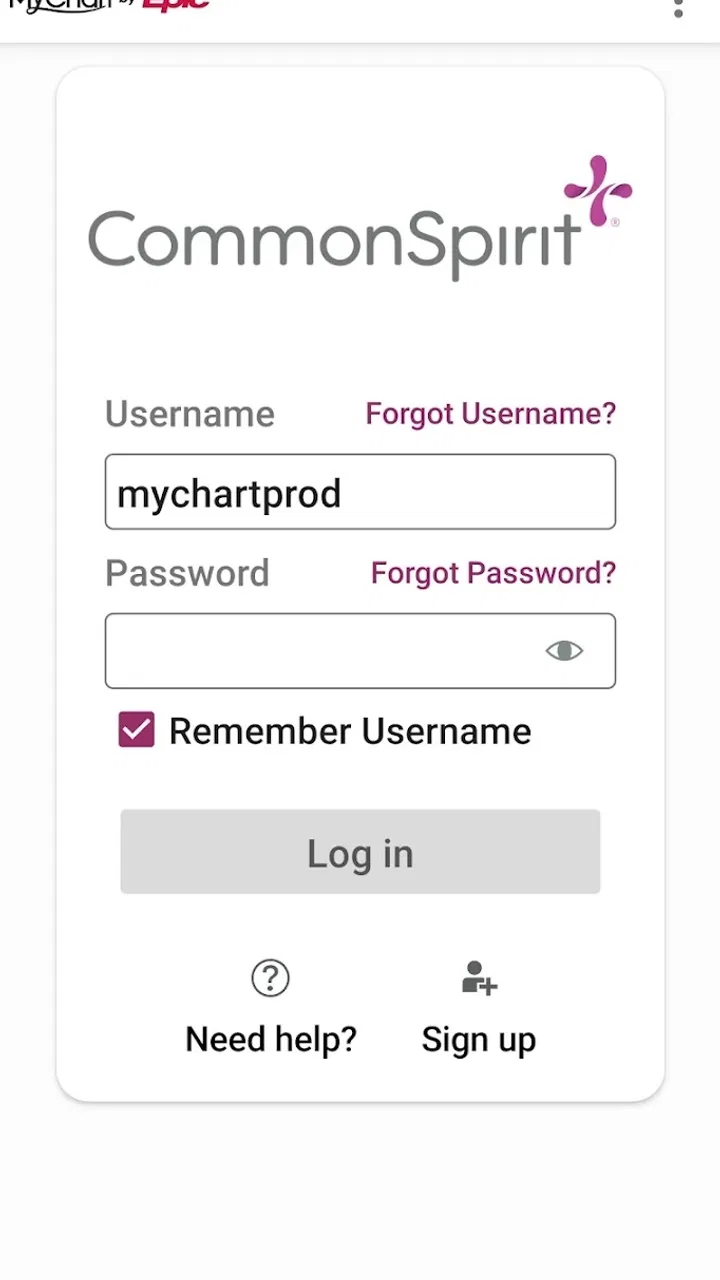
CommonSpirit - CO/KS/UT
- 4.4
- Rating
- 10.00K
- Installs
- Free
- Price

 Analysis by App-foxy
I approached CommonSpirit - CO/KS/UT as a practical medical app rather than a general health tracker. Its purpose is focused: it provides mobile access to the CommonSpirit Health patient portal for people connected with care in Colorado, Kansas, or Utah. That narrow role is important because a patient portal is most useful when it reduces small bits of friction around an existing healthcare relationship, not when it tries to replace professional advice.
My first impression is that this is an app for moments when you need to deal with your care on your own schedule. Checking a portal from a phone can be more convenient than opening a browser, especially when you are away from home, waiting for an appointment, or trying to keep several health-related tasks in one place. At the same time, I would not treat it as an emergency channel or as a substitute for speaking with a clinician. Its value depends on whether your care is connected to the CommonSpirit Health network covered by the app.
How the app fits into a real patient workflow
When I fit this portal into a real care routine, I think beyond simply opening it to check something: I decide what I want to accomplish before signing in, then leave time to review the result and note any follow-up for my care team. That small habit keeps phone access useful without turning a quick check into a substitute for a proper conversation. It also sets up the next section on making repeat visits more deliberate.
You May Also Like

 AccuWeather: Weather Radar
AccuWeather Review: A Quick, Clear Forecast for Everyday Decisions
For everyday plans, the best forecast is the one you can understand quickly. AccuWeather makes rain timing, radar, and local conditions easy to act on, with a few trade-offs.

 Hill Climb Racing
Why Hill Climb Racing Still Turns Crashes Into One More Run
A tiny car, a bumpy hill and one more upgrade: Hill Climb Racing keeps resurfacing because its simple chaos makes every near-miss feel personal.

 AliExpress - Shopping App
AliExpress Makes Global Shopping Feel Personal, but Shoppers Bear the Risk
AliExpress turns a global marketplace into a pocket-sized discovery engine. Its reach is useful, its shopping loop compelling, and its trade-offs easy to miss.

 Lords Mobile: Kingdom Wars
Lords Mobile Is a Kingdom-Building Routine, Not a Quick Match
A case-by-case verdict on the building, battles, device demands, and social commitments that make Lords Mobile rewarding for some players and exhausting for others.

 PDF Scanner app - TapScanner
TapScanner Makes Paperwork Easier to Capture, Check, and Share
TapScanner makes scanning with a phone feel less like a rescue operation and more like a dependable step in getting work done. Its capture tools are useful, though not flawless.

 Block Blast!
 Shows How Much a Puzzle Game Can Leave Out
A quiet grid game shows why puzzle players increasingly value instant clarity, repeatable skill and low-pressure play—and where the genre still needs to catch up.
More From Our News Desk
View All News


A focused portal instead of a general health companion
CommonSpirit Health developed this free medical app for portal access, so its usefulness is tied to account-based care rather than entertainment, fitness, medication reminders, or symptom exploration. That distinction helps set expectations. If you are looking for exercise tracking, a standalone blood pressure log, or broad medical education, this is not the right tool. If you already use the relevant CommonSpirit Health patient portal, the app has a much clearer reason to be installed.
I see the strongest use case in routine administration. A patient may need to review information before a visit, keep track of a conversation with a care team, or handle a portal task while away from a computer. A phone-based entry point makes those moments less dependent on remembering to sit down at a desktop. The benefit is not flashy; it is the ability to deal with healthcare paperwork and communication when the need actually appears.
One realistic example is preparing for an appointment during a busy workday. I might open the app during a break, review the information already available in my portal, and make a note of anything I need to ask at the visit. Later, I can return to the same account instead of relying on memory or searching through unrelated messages. That workflow is especially helpful when a health issue involves several appointments or when a family member is helping organize care.
What the public signals suggest about adoption
The app has an average rating of 4.4 from around two hundred ratings, with a little over one hundred written reviews. I read that as a generally positive reception, but not as proof that every patient will have a smooth experience. Portal apps often depend on account status, regional availability, identity checks, and the healthcare organization’s own processes. A good rating can indicate that the basic experience works for many people while still leaving room for individual access problems.
It has passed ten thousand installs, which gives it a modest but meaningful footprint for a regional patient-portal app. The developer is CommonSpirit Health, a detail that matters here because the app’s usefulness is connected to that organization’s care network. I would be more cautious about installing it if I were not already a patient in the applicable region, since the app is not presented as a universal portal for every hospital or clinic.
The app is free and rated for Everyone, which removes two common barriers: there is no purchase decision before trying it, and the age classification does not restrict ordinary users from installing it. Those points should not be confused with medical suitability for children or with a guarantee that every account type is supported. The age label describes the app’s content classification, not the complexity of managing healthcare information.
Checking compatibility before relying on it
The current version is 11.5.2, and the minimum operating-system requirement is version 9. That makes the app accessible to many older phones, although I would still check the device’s available storage, operating-system condition, and account access before an important appointment. A portal app is most frustrating when installed for the first time at the exact moment a message or document is urgently needed.
My practical advice is to install it ahead of time, sign in when you are calm, and confirm that you can reach the part of the portal you expect to use. This is not about assuming a problem; it is about separating setup from a time-sensitive healthcare task. If you share a phone with another person, I would also pay attention to which account remains active and whether notifications could reveal private information on the lock screen.
Trust starts with the boundary of the product
I find the app easier to evaluate because its stated role is limited. It is not asking me to believe that a mobile interface can diagnose an illness or manage every part of treatment. It is an access point to a patient portal. That boundary is healthy: clinical decisions still belong with qualified healthcare professionals, while the app can support the administrative and communication side of care.
For trust, I would judge it by the choices visible during sign-in, account use, notifications, and sign-out rather than by the app’s medical category alone. A medical label does not automatically tell me how an app handles sensitive information. Before using it regularly, I would review the permission prompts presented on my device and the privacy information made available through the official app and portal. I would avoid granting access that is unrelated to the task I want to perform.
Account controls deserve deliberate attention
The most sensitive part of this experience is the account itself. A patient portal can contain information that I would not want displayed casually, so I would use a strong, unique password and avoid signing in on a device that other people routinely use. If the app offers account-security choices during setup or within the portal, I would enable the protections that fit my situation and keep recovery details current.
I would also make a habit of signing out when using a borrowed or shared device. On my personal phone, I would inspect the lock-screen notification settings. A message preview can expose more than intended even when the phone is protected. Turning previews off, or limiting them to a generic alert, is a simple way to preserve privacy without abandoning notifications altogether.
Another useful habit is separating the app from informal medical notes. I would not copy sensitive portal content into unsecured notes, screenshots, or messaging apps merely to make it easier to find. If I need information for an appointment, I would prepare a short question list without duplicating more personal details than necessary. This reduces the number of places where private information is stored.
Data-sensitive moments in everyday use
Healthcare information feels different from ordinary app content because even a small notification can be personal. I would be particularly careful in public places such as a workplace, public transport, or a waiting room. Opening the app in those settings may be convenient, but I would check who can see the screen and avoid discussing account details where others can hear.
Family care creates another important trade-off. A relative may help with appointments or messages, but sharing a login can make it difficult to maintain clear control over the account. I would prefer using whatever formal account-access arrangement the healthcare organization provides rather than passing around a password. That approach keeps responsibilities clearer and makes it easier to change access later if circumstances change.
When using a portal app, I would also distinguish between information that is already part of my record and information I am newly entering. Before sending a message or submitting a form, I would reread names, dates, and the intended recipient. A phone’s smaller screen can make it easier to overlook a mistake, particularly when I am tired or worried. Taking a few seconds to review is worthwhile when the content is medical.
Where the app is useful, and where it is not
I would recommend this app to an existing CommonSpirit Health patient who wants a direct mobile route to the applicable portal and prefers handling routine tasks from a phone. It may also suit someone who frequently moves between home, work, and appointments and does not want healthcare administration tied to a desktop computer.
I would not recommend relying on it as an emergency service. If I had severe symptoms or an immediate safety concern, I would use the appropriate emergency or urgent-care route rather than waiting for a portal response. A patient portal is also a poor replacement for a conversation when the issue is complicated, rapidly changing, or emotionally difficult to explain in a short written message.
People outside the CommonSpirit Health care context should probably choose a different option. A general health-record app, their own provider’s portal, or a browser-based service may be more relevant if their clinicians do not use this system. Installing a regional portal simply because it appears in a medical-app search would add confusion without improving access to care.
Compared with browser access and other health apps
The usual alternative is opening the patient portal in a mobile browser. A browser can be perfectly adequate, particularly for occasional use or when I do not want another app on my phone. The dedicated app’s advantage is convenience: it gives the portal a clear place on the device and can make returning to an established healthcare workflow feel more direct.
The browser alternative may be better on a shared device, a work phone, or a phone with limited storage. It also keeps the portal separate from other installed apps. On the other hand, repeatedly navigating through a browser can feel cumbersome when I need the portal several times during a period of active care. My choice would depend less on loyalty to one format and more on how often I use the portal and how carefully I can protect the device.
This app should not be compared too closely with wellness platforms or symptom-checking tools. Those products may offer tracking, educational content, or lifestyle features, while this one is centered on access to CommonSpirit Health care information. The trade-off is focus: fewer distractions, but also less value if what I really want is long-term personal health measurement.
Small habits that make the experience safer
I would begin by confirming the developer name before installing, especially if several similarly named medical apps appear in search results. CommonSpirit Health is the developer associated with this app, and matching that detail helps avoid choosing an unrelated application. After installation, I would check that the account and portal destination are the ones I expect before entering sensitive information.
I would keep the app updated through the official device store, but I would not install unofficial copies or follow sign-in prompts from unexpected messages. A healthcare account deserves the same caution as online banking. If a message asks me to enter credentials through an unfamiliar page, I would close it and open the app directly instead.
I would also review the app after changing phones, changing a password, or ending a period of shared caregiving. Those are moments when old sessions, saved credentials, or notification settings can remain unnoticed. A quick review of active access and device privacy is more useful than assuming that a previous setup still reflects my current situation.
My cautious verdict
CommonSpirit - CO/KS/UT makes sense as a focused companion for patients who already belong to the relevant CommonSpirit Health portal. I like that its purpose is straightforward and that the free installation lowers the barrier to trying a mobile route. The rating of 4.4 and its growing install base suggest that many users find the basic experience worthwhile, while the regional focus explains why it will not be equally useful to everyone.
My recommendation comes with a clear condition: treat it as a convenient doorway to healthcare administration, not as a complete medical service. Set it up before you need it, protect the account, control notification visibility, and think carefully before sharing access with another person. If your care is outside the covered CommonSpirit Health setting, a different provider portal will be the better choice.
For the right patient, the app can remove a small but meaningful amount of friction from everyday care. Its strongest quality is not a long list of extras; it is the ability to keep a relevant patient-portal workflow close at hand. Use it when mobile access genuinely helps you stay organized, and keep the final say over what appears on your screen, who can access the account, and when a clinician or urgent service is the more appropriate next step.
FAQs for CommonSpirit - CO/KS/UT
01What features does the CommonSpirit app offer?
The CommonSpirit app provides a comprehensive suite of features, including appointment scheduling, health record access, and personalized health tips. Users can also communicate directly with healthcare providers, receive reminders for medications, and access a directory of health facilities in the CO, KS, and UT regions.
02Is the CommonSpirit app available for both Android and iOS?
Yes, the CommonSpirit app is available for download on both Android and iOS platforms. Users can find it on the Google Play Store and Apple App Store, ensuring compatibility with a wide range of smartphones and tablets.
03How secure is my personal information on the CommonSpirit app?
CommonSpirit prioritizes user privacy and employs advanced encryption measures to protect personal and medical information. The app complies with all relevant regulations, including HIPAA, ensuring that your data is handled with the utmost care and security.
04Can I use the CommonSpirit app to connect with my healthcare provider?
Absolutely, the app facilitates seamless communication with your healthcare providers. You can send messages, schedule virtual consultations, and receive updates on your health, making it easier to manage your healthcare needs efficiently and effectively.
05Are there any costs associated with using the CommonSpirit app?
The CommonSpirit app itself is free to download. However, certain features, like virtual doctor consultations, may incur additional fees depending on your healthcare provider and insurance plan. It's advisable to check with your provider for any specific charges.
Pros
- User-friendly interface for easy navigation.
- Comprehensive health resources available.
- Secure login for patient confidentiality.
- Appointment scheduling feature is efficient.
- Access to personal medical records anytime.
Cons
- Limited functionality without internet access.
- Some features require frequent updates.
- Occasional crashes reported by users.
- Not all facilities are covered in the app.
- Notification settings can be complex.

CommonSpirit - CO/KS/UT
Gallery